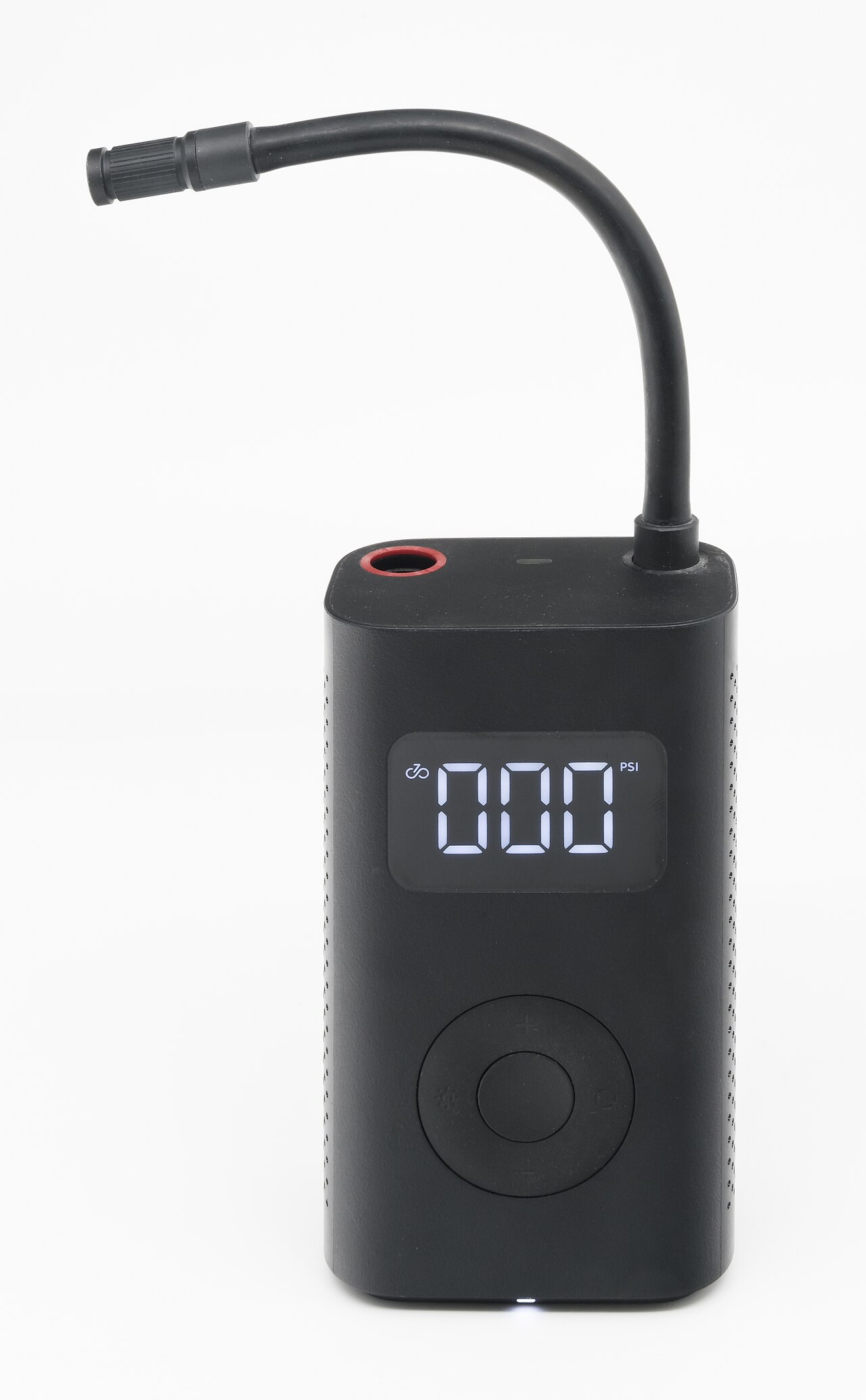
Portable Compressors: 12V Guide
A 12V portable compressor plugs into your vehicle's 12-volt outlet (cigarette lighter socket) and uses the car's electrical system to pump air into tires. Most units deliver 1–2 CFM at 30–40 PSI and take 3–8 minutes per tire depending on how low the pressure is. Keep the engine running while you use it so the alternator keeps the battery charged.
What is a 12V portable compressor?
A 12V portable compressor is a small electric air pump that runs on your vehicle's 12-volt electrical system. Inside the plastic case sits a tiny piston pump — usually a direct-drive diaphragm or piston mechanism — powered by a DC motor. When you plug it into the 12V outlet, the motor spins, the piston moves up and down, and air gets pushed through the hose into your tire. These units are not the same as the big stationary compressors you see at gas stations or tire shops. Those run on 120-volt household current or 240-volt shop power and can fill a tire in 30 seconds. A 12V unit is limited by what your car's electrical system can deliver — typically 10 to 15 amps through the outlet fuse. That caps the motor size, which caps the airflow. You'll see two main numbers on the box: PSI (pounds per square inch) and CFM (cubic feet per minute). PSI is the maximum pressure the pump can reach. CFM is how much air it moves. For car tires, you need at least 35 PSI capability — most go to 100 or 150 PSI. CFM matters more for speed. A typical 12V unit does 1.0 to 1.5 CFM at 30 PSI. That's enough for passenger tires. Truck tires need more volume.How does a 12V compressor work?
Think of it like a bicycle pump, but the handle moves itself. The motor turns a crankshaft. The crankshaft pushes a piston up and down inside a cylinder. On the down stroke, air gets sucked in through an intake valve. On the up stroke, that air gets compressed and pushed out through an exhaust valve into the hose. Most 12V units use a diaphragm instead of a metal piston. A flexible rubber disc flexes up and down. It's lighter, cheaper, and quieter. The trade-off: diaphragms wear out faster than metal pistons, especially if you run them hot. The motor draws 8–15 amps. Your car's 12V outlet is fused at 10 or 15 amps. If the compressor pulls more than the fuse rating, the fuse blows. That's why the cord has a built-in fuse — usually a glass tube or blade type near the plug. If it blows, you replace the fuse, not the compressor. Heat is the enemy. The motor and pump get hot fast. Most units have a duty cycle: run for 10–15 minutes, then cool for 10–15 minutes. Ignore this and the thermal cutoff trips (or the motor burns up). You'll smell hot plastic and the unit will shut off. Let it cool before you restart.What size compressor do I need?
Match the compressor to your tire size. A compact car tire (195/65R15) holds about 2.5 cubic feet of air at 35 PSI. A 1.0 CFM compressor fills it from flat in roughly 4–5 minutes. A full-size truck tire (275/65R18) holds 5+ cubic feet. Same compressor takes 10–12 minutes. Two tires? Double it. Check the CFM rating at 30 PSI, not the max PSI number. Marketing loves to shout "150 PSI!" but the CFM at working pressure tells you the real speed. If the box only lists max PSI and no CFM, assume it's slow. For a sedan or crossover, a 1.0–1.2 CFM unit works fine. For a pickup, SUV, or van with LT-metric tires, look for 1.5 CFM or higher. Some "heavy duty" 12V units hit 2.0–2.5 CFM — they draw 15–20 amps and need a direct battery connection (alligator clips) because the cigarette lighter fuse can't handle it.How long does it take to fill a tire?
Depends on three things: how low the tire is, how big the tire is, and the compressor's CFM. As a rough guide: - Sedan tire, 26 PSI → 35 PSI (9 PSI gain): 2–3 minutes - Sedan tire, 15 PSI → 35 PSI (20 PSI gain): 5–7 minutes - Truck tire, 26 PSI → 40 PSI (14 PSI gain): 4–6 minutes - Truck tire, 15 PSI → 40 PSI (25 PSI gain): 8–12 minutes The gauge on the compressor is convenient but often off by 2–5 PSI. Keep a separate digital tire gauge in the glovebox. Check pressure after the compressor stops, not while it's running — the running gauge reads high because of line pressure. If you're filling all four tires, do them one at a time. Let the compressor cool between tires. Running it 20 minutes straight on a hot July afternoon in a North Miami parking lot is how you kill the motor.Can I run it off my car battery?
Yes, two ways. The cigarette lighter outlet works for units under 10–12 amps. The engine must be running. The alternator puts out 13.8–14.4 volts and 60–150 amps — plenty to run the compressor and charge the battery at the same time. With the engine off, you're draining the starting battery. A 10-amp draw for 15 minutes pulls 2.5 amp-hours. Do that twice and you might not start the car. Larger compressors (15+ amps) come with alligator clips for direct battery connection. Red to positive, black to negative. Engine still needs to run. The clips bypass the outlet fuse and wiring, which aren't built for that current. Make sure the clips grip clean metal — corrosion adds resistance and heat. Never connect a 12V compressor to a jump pack or portable power station unless the pack is rated for 15+ amp continuous output. Most aren't. They'll overheat or shut down.What features actually matter?
Auto shutoff: You set the target pressure (say 35 PSI), hit start, and the compressor stops when it hits that number. Without it, you watch the gauge and yank the hose at the right second. Worth the extra $10–15. Built-in light: A small LED near the hose end. Seems trivial until you're filling a tire on a dark roadside at 11 p.m. Then it's the difference between a five-minute job and a miserable one. Long hose and cord: you need to reach all four tires without moving the car. Look for a hose at least 2 feet long and a power cord at least 10 feet. Short cords mean repositioning the car in the lot, which gets old fast. Carrying case: keeps the hose from tangling and the adapters from disappearing into the trunk. Not essential, but nice to have. The video below shows a portable 12V tire compressor in action — an emergency pump that plugs into the car's 12V outlet to inflate a tire on the spot. It demonstrates the basic hookup and inflation process covered above:Where should you keep your portable compressor?
In the trunk, where you can actually reach it. A portable compressor buried under groceries and gym bags is useless when the low-tire light comes on. Keep it in the same bag as the hose, the adapters, and a standalone tire gauge, so you grab one thing instead of hunting for three. Trunk heat is fine — these units are built for it — but don't leave the adapters loose where they can rattle into the spare-tire well and disappear. If you carry a portable compressor regularly, test it every few months. Plug it in, run it for a minute, and confirm it still builds pressure. Seals dry out in Florida heat, and a dead portable compressor discovered on the side of I-95 at midnight is worse than no compressor at all, because it cost you the 10 minutes you spent digging it out. A quick seasonal check — spring and fall — keeps your portable compressors (even a cheap backup unit) ready when you need them.When to call us
DIY is great, but some jobs need a pro. If the problem persists, you spot anything dangerous, or you'd rather have an expert handle it, call (786) 949-9563 — North Miami Tire serves North Miami and nearby (Mon-Fri 5PM-7AM, Sat-Sun 24H). No pressure, no upsells.