How Heat Changes Pressure in North Miami
In North Miami, heat isn't a special event — it's the daily background. From late spring through fall, afternoon asphalt radiates like a furnace, and that steady heat quietly changes what's happening inside your tires. Tire pressure rises as temperatures climb, and a tire that was perfectly set on a mild morning can be running high by mid-afternoon. It's a slow, invisible shift, and most drivers never notice it until a tire wears unevenly or the ride starts feeling harsh.
Which pressure number should you actually use?
Two numbers matter, and they're easy to mix up. The recommended pressure for your car lives on the driver's door jamb placard (usually somewhere in the low-to-mid 30s PSI) — that's your target. The maximum printed on the tire's sidewall is a never-exceed ceiling, not a goal. Set cold pressure to the placard number and let the day's heat do whatever it does on top of that.
What Happens When Tire Pressure Rises?
When tire pressure runs high, the tire's contact patch shrinks, which can mean:
- less grip and longer-feeling stops on hot pavement,
- a harsher ride over North Miami's patched-up streets,
- faster wear down the center of the tread,
- and in extreme cases, a greater blowout risk on a scorching highway run.
Why Does Heat Affect Tire Pressure So Much?
So, why does heat affect tire pressure so much? The answer lies in the way that heat causes the air inside the tire to expand. As the temperature rises, the air molecules inside the tire start to move faster and faster, causing the pressure to increase. This is known as thermal expansion, and it's a fundamental principle of physics — the same reason a sealed bottle feels firmer after sitting in a hot car.How should you check pressure in this heat?
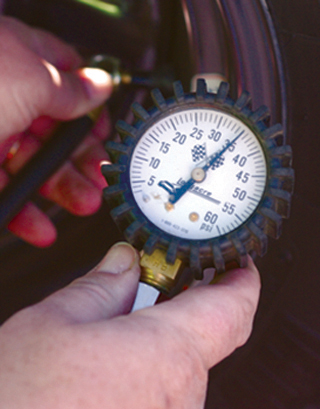
Check in the morning, before you drive — that's when the tires are cold and the reading matches your placard number. Press a gauge firmly onto the valve stem and read the number. Make it a monthly habit, and check again after any big temperature swing. One important rule: never bleed air out of a hot tire to hit the placard number. The pressure will drop back down on its own as the tire cools, and you'll end up underinflated.
What if the pressure is too high?
If a cold-tire reading is above your placard number, let a little air out: press the tiny pin in the center of the valve stem with the back of your gauge, a key, or a small screwdriver — a short hiss at a time — then re-check. Go slow. Overshooting leaves you underinflated, which is worse for wear and fuel use than being a touch high.
Where should you check — garage, shade, or sun?
A tire sitting in direct North Miami sun can read a few PSI higher than the same tire in a shaded garage — the sun heats the air inside just like driving does. For the most consistent number, check in the morning before the sun hits the car, in the shade or garage. If one side of the car baked in the sun and the other sat in shade, expect the sunny-side tires to read a touch higher; that's normal, not a problem. What you don't want is a big difference between two tires on the same axle — that points to a slow leak, not the weather.
What if the TPMS light comes on in the heat?
Most cars flash the tire-pressure warning when a tire drops well below the placard number. Heat usually pushes pressure up, so a TPMS light on a scorching afternoon more often means a leak or a puncture than the weather. If the light comes on, check all four tires with a gauge before you drive far — and the spare too, if you have a full-size one, since heat ages spares sitting in the trunk just the same. A quick top-off to the placard number gets you rolling; if the same tire keeps dropping week after week, it's shop time.
What the Video Shows
The video above, "The $1 Tire Pressure Test!" by TERAH BUILDS, is a quick, no-frills demo of checking tire pressure with a cheap gauge — press it on the valve stem, read the number, done. Short and practical, and a good reminder that the tool itself costs less than a coffee.