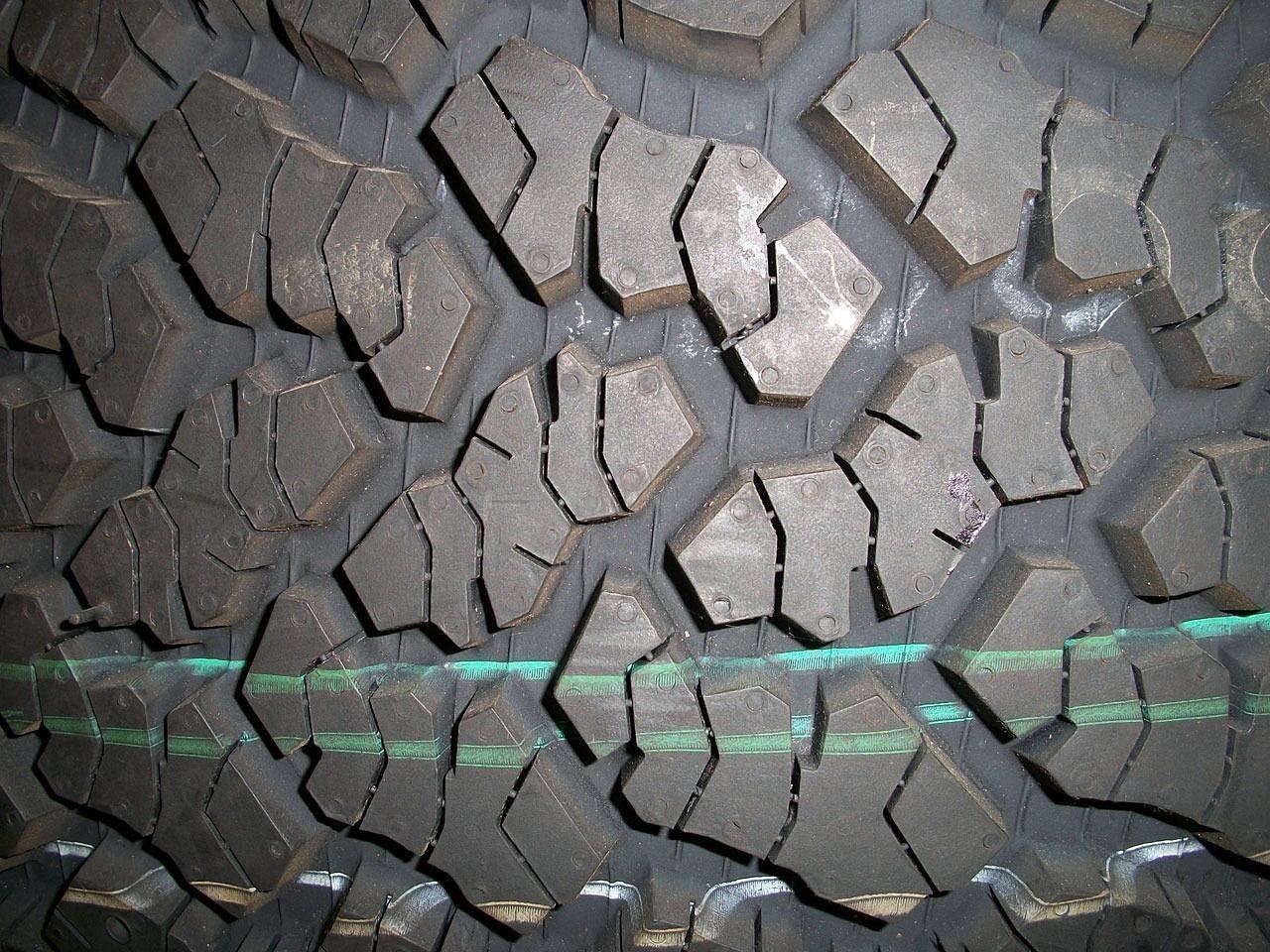
If you have ever popped the trunk after a flat on the shoulder of Biscayne Boulevard, knelt down, and visually inspected the spare — and felt that small wave of relief because the tread looks deep, the rubber looks black, the sidewall has no obvious slash — this post is for you. That relief is misleading. Roughly a third of the spare-tire service calls we run in the North Miami / NE 125th / Ojus corridor end with the same sentence: "But it looked fine."
The spare that looks fine and the spare that holds 35 PSI are not always the same tire. The North Miami climate is uniquely hard on stored spares. We bounce between 80°F evenings and 95°F afternoons, the trunk floor hits 130°F on a sun-baked car, and humidity works its way into every seam. Five failure modes do most of the damage, and none of them are visible at a glance.
1. Sidewall dry-rot — the tread lies
Dry-rot is the slow oxidation of the rubber polymers. It begins at the surface and works inward; the inner cords stay flexible for years after the outer skin hardens. A spare that lives under the cargo mat in a Biscayne garage, or under a trunk deck in direct sun at the Calder raceway parking lot, can have a brittle, cracked outer skin that still looks "black" while the elastomer underneath has lost elasticity.
The test is the thumbnail. Press your thumbnail firmly into the sidewall for five seconds and release. If the rubber stays white for more than a second before the color returns, the polymer is hardening. If you can see hairline cracks running circumferentially around the sidewall — even one — the spare is no longer road-safe. Tire manufacturers generally call a six-year tire end-of-service regardless of tread depth, and in the North Miami climate we shorten that to five.
Field rule · NMT-01
If the spare's DOT date code (the last four digits, e.g. 2319 = week 23 of 2019) is more than five years old, treat it as a roadside risk and replace it on the next service visit. We stock take-offs and new donuts for the most common North Miami fitments — call before you head out.
2. The Schrader valve core decays silently
The brass or nickel valve stem at the wheel is a precision seal. It contains a small spring-loaded poppet, and the rubber gasket on that poppet hardens with age and heat. A valve core can leak at one PSI per day — slow enough that the tire still looks inflated the day you check it, but empty by the time you need it three weeks later on a Sunday morning.
This is the single most common reason a "looks fine" spare is flat when unstrapped. The fix is a five-cent valve core, swapped with a $4 tool, but it requires the spare to be removed, deflated, and re-inflated. Most drivers never do it.
3. Bead seating fails on donuts
Compact temporary spares (the "donuts" that ship with most sedans) have a smaller, tighter bead that depends on a specific wheel-rim profile to seal. If the donut has been stored loose in the trunk — bouncing around over speed bumps on US-1, knocking against a jack handle, the wrench kit — the bead can develop a micro-leak at the rim interface. No visible damage. No audible hiss. Just a tire that loses half a PSI per day and reads zero the morning of.
4. UV damage through the trunk
Most people don't think of a trunk as a UV exposure risk. In North Miami, it absolutely is. A dark trunk lid in the summer can reach 160°F, and over time the UV that passes through rear windows and through the gap at the trunk gasket cooks the upper sidewall of a stored spare. The damage is uneven — the side facing the rear glass ages faster than the side facing the floor. Rotate or bag the spare.
5. The slow leak nobody detected
Tires lose roughly 1–2 PSI per month even under perfect conditions. A spare that was inflated at the factory to 60 PSI in 2019 and has sat in a Biscayne garage since reads around 18 PSI today. It will not seat on the rim under those conditions — you will not be able to inflate it at the gas station. This is the most preventable failure on the list. Check the spare's pressure when you check the other four tires.
"I have replaced more spares on the shoulder of I-95 than I have replaced road tires. Drivers check the four on the ground every gas fill-up. The fifth tire nobody touches until it's the only option."
The four-minute prevention drill
Twice a year — Daylight Saving time change is a fine anchor — spend four minutes on the spare:
- Read the DOT code on the sidewall. If it is over five years old, plan a replacement.
- Inflate to manufacturer spec (usually 60 PSI for full-size spares, 60 PSI for compact donuts, 30 PSI for motorcycle-equivalent run-flats — check your door-jamb sticker).
- Press the thumbnail into the sidewall. Color should return in under a second.
- Spray soapy water on the valve stem. Bubbles = new core for $4.
If you cannot or will not do that, that is exactly the call we built this service for. We will come to your driveway in North Miami — any corridor from Biscayne through 125th, the Ojus neighborhood, the Bal Harbour border — and run the full check. No charge if the tire is fine; replacement at cost plus labor if it isn't.
A spare tire is the one part of your car you depend on exactly once, at exactly the worst time. The fact that it looks fine is not the same as the fact that it works.
If your spare fails on the shoulder tonight
Do not change a tire on the shoulder of I-95. Pull into the next parking lot — there is one within a mile on most North Miami exits. If you cannot make it to a lot, pull as far onto the shoulder as the wheels allow, turn on your hazards, set out reflective triangles if you have them, and call. We dispatch a tech on the shoulder only as a last resort and only when the shoulder has space to safely stage a van. The van carries a full-size spare for most North Miami fitments and a tire plug kit; if the sidewall is damaged we triage to a no-spare tow-and-replace rather than a roadside swap.
For the full price of a roadside spare-swap including the plug-upcharge and the diagnostic hold, see Pricing. To book an at-home spare audit, see Booking. For an explainer of what our tech actually does at the curb, see How It Works.